
BitPay supports ETH on the Polygon Network for paying invoices, buying gift cards and loading the BitPay Card, making it an efficient method to spend ETH with decrease fees. Wallet users also can regulate their Fuel restrict on a per-transaction foundation. This can come in hand if you have to make an particularly urgent transaction, while different occasions maintain non-urgent transactions at a low fuel restrict. The main factors that impact how much gas you’ll pay are community congestion, the complexity of the action you’re taking and the urgency of your transaction.
Asset Tokenization
The most common method to represent fuel fees is in gigawei, which is equivalent to one billion wei. Gasoline fees are the prices required to hold out transactions or operations on a blockchain. These charges go directly to validators who secure and maintain the community. Any on-chain motion, whether or not it’s transferring tokens, utilizing a decentralized app (dApp), or executing a sensible contract, triggers a fuel charge. Validators play a crucial half on this economically-driven system.
- Additional, the pockets also reveals the estimated times for respective transaction fees, must you be willing to pay extra for faster transactions.
- Please note that the provision of the products and services on the Crypto.com App is topic to jurisdictional limitations.
- Any on-chain action, whether it’s transferring tokens, using a decentralized app (dApp), or executing a sensible contract, triggers a fuel charge.
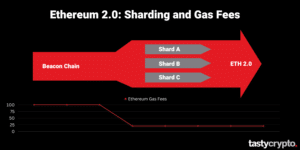
- The aim of this upgrade was to take away the unpredictability of fuel fees primarily based on network traffic.
Use Layer-2 Solutions For Small Transfers
When lots of people are using the network, gasoline prices tend to go up, making transactions costlier. To handle this, Ethereum created a model new pricing system called EIP-1559 that sets a “base charge” to maintain fuel prices extra predictable. This way, you will not be as likely to get hit with a surprise spike in charges when the network is busy.
What’s Gwei In Crypto? A Guide To Ethereum Gasoline Prices
Ethereum co-founder Vitalik Buterin referred to as this the blockchain trilemma. Be Part Of the Coinmetro group on Discord and Telegram, the place forward-thinking merchants and traders collect to share insights, discover new alternatives, and dive deep into cryptocurrencies. She holds a Bachelor of Science in Finance degree from Bridgewater State University and helps develop content methods. Stack Exchange network consists of 183 Q&A communities together with Stack Overflow, the most important, most trusted online neighborhood for developers to study, share their information, and construct their careers. A personal notice (up to one hundred characters) may be saved and is useful for transaction tracking. There’s no assurance of future profitability, and content material might not reflect current https://techgup.org/blogs/crypto-wallet-for-brokers-main-reasons-to-use-it/ opinions.
Which Crypto Networks Have The Lowest Gasoline Fees?
Users pay gasoline fees in ETH, Ethereum’s native cryptocurrency, with the whole price based mostly on the gasoline used and the gasoline worth at that moment. ETH fuel charges are the transaction fees paid to validators on the Ethereum network for processing transactions and executing smart contracts. These charges are calculated primarily based on the complexity of the transaction and the demand on the network while processing, with higher demand resulting in elevated fees.
They are necessary as a result of they supply the necessary incentive for validators to maintain the community secure and efficiently operational. As crypto, DeFi, NFTs, and Web3 apps grow, understanding gasoline fees in crypto stops being elective. Every time you ship ETH, swap tokens on a DEX, or mint an NFT, you pay a gas charge. That cost impacts whether a small transaction is sensible, how dApps are designed, and which networks businesses select to build on. Since the Ethereum upgrade referred to as EIP-1559, the gasoline payment structure has been divided into two components. The first is the bottom charge, which routinely adjusts according to present network demand and is completely faraway from circulation.
The surge in Ethereum’s gas charges, typically seen eclipsing $5.70 and swinging wildly, underscores an ongoing concern throughout the neighborhood. Despite this, innovation in the house offers a glimpse into an period of buying and selling with out fuel charges. Our Kvarn X app emerges as a beacon for users looking for to perform crypto actions seamlessly, bypassing the deterrence of escalating gas costs. It is essential to notice that NFT gas fees can escalate quickly during times of community congestion.
A gasoline charge is the worth you pay to perform any action on a blockchain. It covers the computation and storage wanted to process your transaction and report it completely on the ledger. This guide explains what a gasoline payment is, how fuel works on different blockchains, what drives fees up or down, and tips on how to scale back what you pay—with an eye on actual usage and business impact. Setting the gasoline price or gas restrict decrease than a sure required amount may lead to failed transactions. If this happens, the quantity of gasoline would nonetheless get deducted from your pockets however the transaction wouldn’t undergo. Since the London improve, nonetheless (as we saw in the Gas Worth Calculation section), the blind auction analogy is now not legitimate.
Taking exercise off the main chain doesn’t cost much and retains your gas expenditure low. You can’t get rid of gas charges in crypto, however you presumably can treat them as an input to technique somewhat than a random annoyance. Layer 2 (L2) networks batch or compress transactions off-chain and settle them to a base chain like Ethereum. You can’t take away gasoline fees in crypto, but you can manage and scale back them with a couple of habits and structural choices. Even if the community is quiet, a posh transaction will nonetheless cost more than a basic payment as a outcome of it consumes more gasoline units, and you pay for that extra computation and storage. Blockchains solely have restricted capacity in every block, so there’s a set quantity of transaction information they’ll course of at any given time.

